
Books by M C Neuffer
Click Titles to see on AMAZON Books, Kindle, & Audible
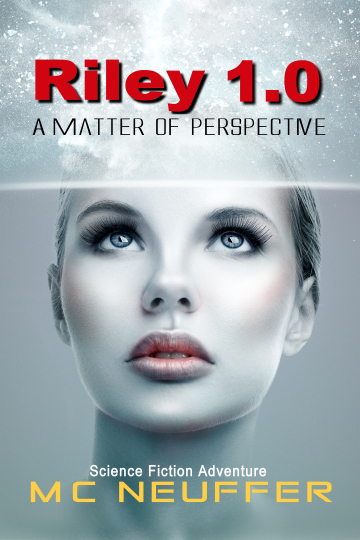
Riley 1.0: A Matter of Perspective
One ordinary evening in New York City, twenty-five-year-old Riley Patterson opens her apartment door and comes face-to-face with herself.
What follows is not a descent into madness — it’s the beginning of something far stranger. Riley and her duplicate discover they’ve been touched by a phenomenon that is reshaping reality itself.
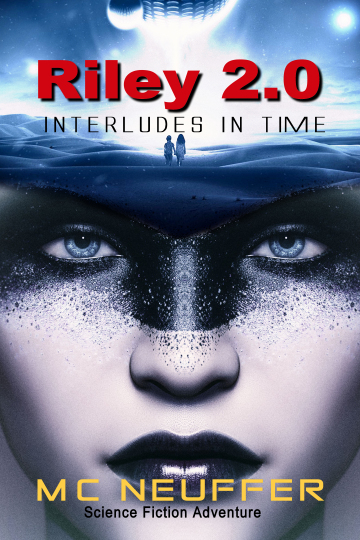
Riley 2.0: Interludes in Time
Two hundred and fifty years is a long time to carry your grief. Riley Patterson own a cloaked alien spaceship, and living off the grid in the Yukon wilderness with two wolf-hybrid dogs.
But solitude doesn’t last. An alien AI needs a ride before his home star goes red giant. Two government agents show up in Dawson City with tranq guns.
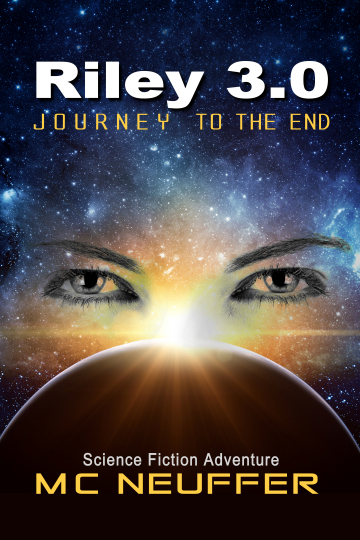
Riley 3.0: Journey to the End
Somewhere in the final era of the universe, a twelve-year-old girl puts her hand through an alien artifact and feels nothing — which means everything.
Darby Daniels lives at the edge of what remains. Two stars. One solar system.
And from somewhere outside time and space, two ancient intelligences named Riley and Michael watch it all unfold — arguing, playing virtual games, and waiting for the right person to arrive.
Darby is that person.
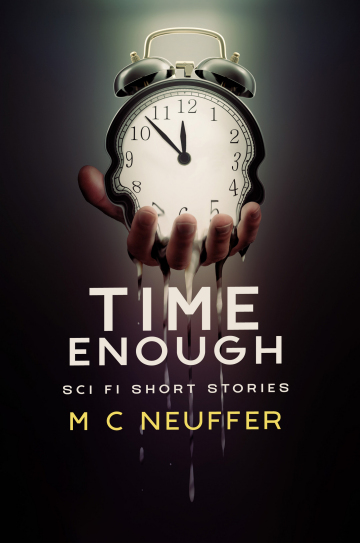
26 Short Stories. 26 ways into the imagination of a writer who refuses to stay in one place.
TIME ENOUGH collects the short fiction of M C Neuffer across a career that has taken him from hard science fiction to supernatural horror, from literary grief to steampunk romance, from noir crime to cosmic comedy. What unites them is not genre but voice — and a set of recurring obsessions that run like signal through the noise: the weight of time, the strange dignity of outsiders, the way small moments crack open into something much larger, and the persistent suspicion that the universe has a sense of humor darker than we’d prefer.
These stories carry the marks of a writer who has studied how stories work and then decided to find out what happens when you work against the mechanism.
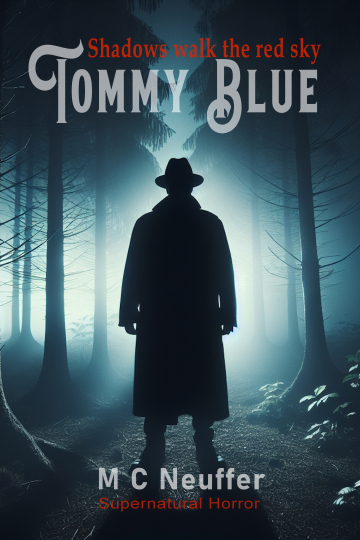
Tommy is good at watching, not good at remembering.
He doesn’t know your name. He may never look at your face. But Tommy Blue knows when something is wrong — and he will make it right.
In the sweltering Missouri Ozarks, a drifter unlike any other moves quietly through the margins of a small town. Tommy is enormous, gentle, and broken in ways others can’t see, a mind that lives only in the present. He speaks little and communicates with Angels only he can hear: Soft Angel, who paints the world in colors only Tommy sees; Hard Angel, who warns him of danger; Fat Angel, who rejoices in small comforts. Tommy corrects wrong things. He protects those who cannot protect themselves. He has always done this. He will always do this.
And something is gathering in Harrison, Arkansas.
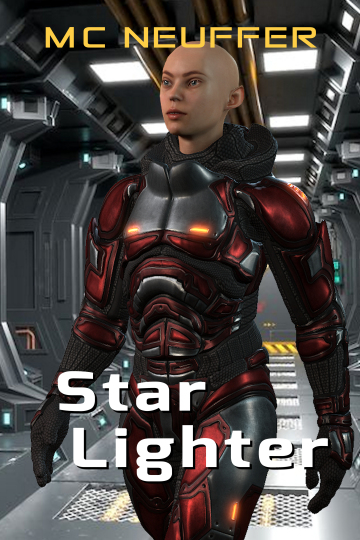
StarLighter: Diary of an Explorer
Dwella is an Explorer for her iron age people — a lone wilderness scout trained from childhood to sense life from miles away, cast messages only other Explorer can catch on the wind. She has walked the wild for years, guided only by her instincts, her spear, and a wolf companion named Theta. She does not believe in magic. Then a dead Explorer’s medallion begins to sing.
A mountain cave deposits her in world entirely — a planet of starships, military bases, and a civilization that has been waiting, for thousands of years, for someone exactly like her.
They call her StarLighter Prime.
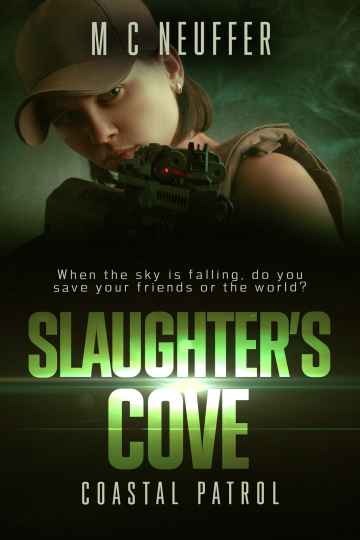
Maritime Suspense
Jennifer is twenty-seven years old. She’s just made lieutenant. She has a new command — thirty-six meters of sleek aluminum patrol boat on the coast of Maine. She’s running a routine coastal patrol, breaking in her new crew, while quietly managing a complicated long-distance relationship, and trying to figure out what her enigmatic new crew member Lambert is actually doing aboard her ship.
SLAUGHTER’S COVE is a maritime thriller built on two converging tracks: a tightly rendered procedural of life and command aboard a State coastal patrol vessel, and a multi-continent terrorism plot
For readers who want their thrillers technically grounded, their protagonists human, and their Maine coast exactly as cold and unforgiving as advertised.
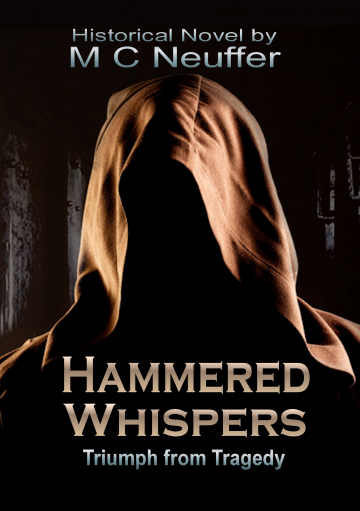
He watched the Vikings burn Lindisfarne when he was seven years old. His parents never came back from the fire.
Rescued by an Irish monk and carried to Ireland, the boy called Miach grows up inside the walls of a monastery in Meath—learning to grind oak-gall ink, copy scripture in the Irish hand, and survive the bruising social world of boys who belong to the land he has only borrowed. When he takes his vows and receives the name Brother Michael, he carries with him a survivor’s understanding of what the Northmen actually are: not demons, not instruments of God’s wrath, but men who cross open water for gold, and who will not stop.
Hammered Whispers is historical literary fiction grounded in meticulous research: the daily rhythms of Irish monasticism, the making of illuminated manuscripts, the political fractures within the early medieval church, and the Druidic tradition that Christianity never fully displaced.
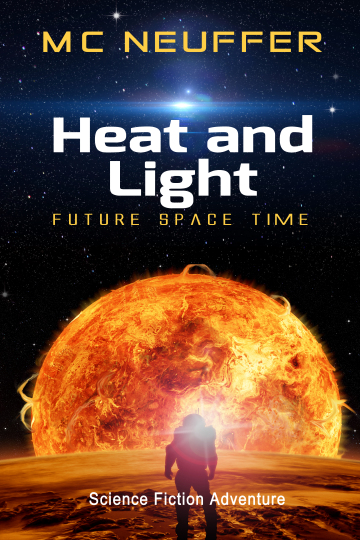
In the far future, humanity has populated the galaxy. While prospecting in the outer reaches of a solar system, three friends find something they didn’t expect in the cold dark. Something smashed flat in an asteroid cluster, waiting there for three-billion years. The universe started in a Big Bang and may now end in a Big Poof.
Heat and Light is Science Fiction story with plausible future science and technology as a backdrop. Artificial intelligence, aliens, other dimensions, and a one-time bit of time travel.
EXCERPT: “I would sit in the open airlock. Just sit on the deck, my legs hanging over the edge, gathering it all in—wanting to drink it, breathe it, float in it. Be alone with it. It was a longing to belong. Belong to the biggest thing that ever was, or ever will be. Be a part of the cold dark.” Sandy
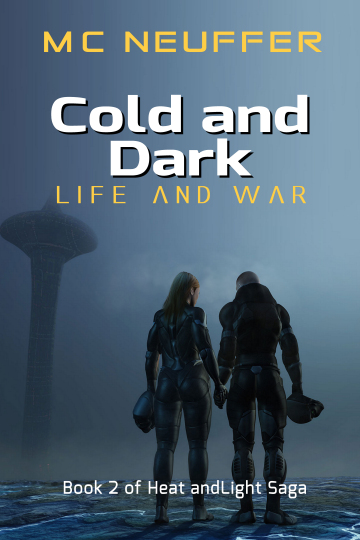
Sequel to HEAT and LIGHT
Gene “Hornblower” Bonner has been dead for twenty years. It was the only way to keep the universe from consuming him.
From Shangri-La he runs the Universal Library Foundation with a race of gentle bear-like scholars and one ancient AI who became human. He has two children he’s never met. A dead man’s secret kept by Sandy, who raised them alone, and by Mica and Abby, who gave them a family on the ranch at Satchel.
Coming home changes everything.
The Surrons have come back because the Zees — those extra-dimensional beings Hornblower once trusted as allies — have a secret hierarchy. The Upper Zees have been manufacturing interstellar wars across the universe for sport, running civilizations like pieces on a board, wiping the slate every two billion years and starting over.
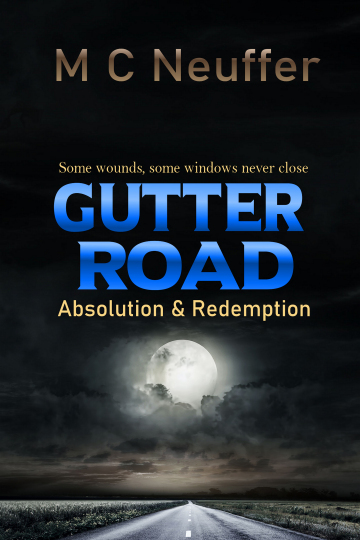
A literary historical novel
August 1953. Fillmore, California. The men who ride out of Gutter’s bar carry a war no one talks about anymore — the one still being fought in their sleep.
Connor came home from Europe with notches on a rifle stock, none of them for Germans. Each one marks a man he couldn’t save. He found his platoon again in the Road Dogs — a motorcycle club of veterans who couldn’t fit back into the suburbs, the jobs, the neat rows of look-alike houses. It isn’t a perfect life, but it’s a life.
When a friend is beaten half to death, his patches taken as trophies, and Gutter’s burns to the ground Connor is left holding two choices: road justice, or something harder. An FBI agent named Thomas Gentry — a man with his own war and his own secrets — is working the same case from the other direction, pulling at threads connecting the motorcycle clubs to the mob, to murdered women, to heroin moving up the coast.
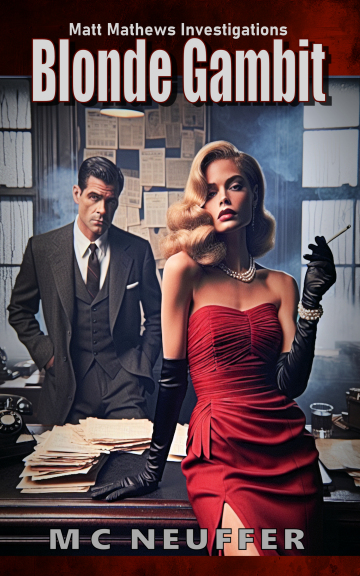
1950s San Francisco Noir Detective Story
A blonde in a red dress walks into a private investigator’s office with a missing fiancé and a story that doesn’t add up from the first word.
Matt Mathews isn’t your standard issue PI. Stanford fullback turned Naval Intelligence officer turned gentleman detective, he works cases that interest him from the comfort of a yacht he keeps in the San Francisco Yacht Club — and from instincts sharpened by four years of digging into everything the Navy preferred un-sniffed. When Suzette Gamble hires him to find her missing fiancé Freddy, he expects a domestic tangle. What he finds is something considerably darker: wartime contraband, mob money, forged documents, and a family secret that would collapse the Gamble dynasty if it reached the society pages.
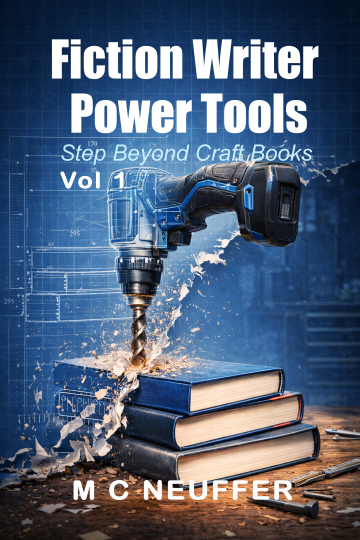
Stop Following Rules. Start Understanding Systems.
Most craft books tell you what to do: show don’t tell, start with action, create conflict. But they never explain why techniques work—or how to diagnose what’s broken in your own writing.
Fiction Writer Power Tools goes deeper than prescriptive rules to reveal the underlying mechanics that separate competent fiction from exceptional art.
- How to control readers’ perception of time passing (not just scene vs. summary)
- Why “close third person” sometimes feels distant—and how to fix it
- The architecture of making readers lean forward
- Building pressure within scenes through competing desires and asymmetric information
- Creating distinct consciousness fingerprints for each character
- The neuroscience of why some scenes feel vivid while others remain abstract
- and more
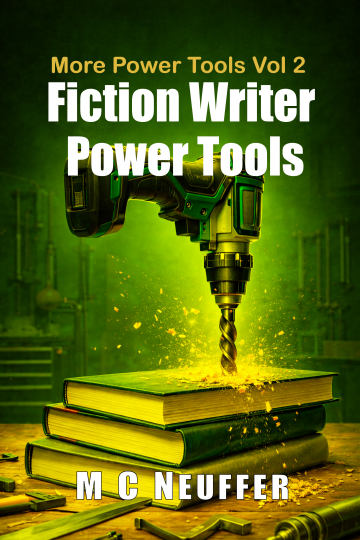
Fiction Writer Power Tools Vol 2 again goes deeper than prescriptive rules to reveal the underlying mechanics that separate competent fiction from exceptional art. Compendium explores twenty two sophisticated techniques that most craft instruction glosses over.
This isn’t another book of writing exercises. It’s a diagnostic manual for serious writers who sense their work should be better than it is, who want to understand why their favorite authors’ techniques succeed, and who are ready to move beyond rules toward principles.
For writers across all genres—literary fiction, thriller, romance, horror, science fiction—who want sophisticated tools for solving problems that have resisted intuitive fixes.
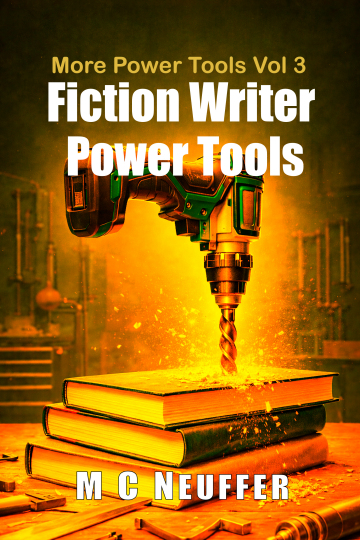
Volume 3 completes the set of Fiction Writer Power Tools.
For writers across all genres—literary fiction, thriller, romance, horror, science fiction—who want sophisticated tools for solving problems that have resisted intuitive fixes.
Topics:
Architecture of Subtext & Unspoken Conflict
Children’s Interiority & Dialogue
Female Social Codes in Fiction
Male Social Codes in Fiction
Internal Identity Negotiation
Narrative Questions & Reader Engagement
Passive Voice: Beyond the Broken Rule
Perfection as Enemy of Good Enough
Personification in Fiction
Reader Engagement
Strategic Use of Sarcasm
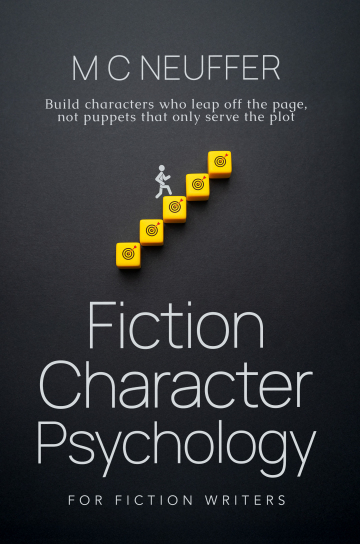
Want to create characters readers can’t forget?
Start here. Most fiction writers know what their characters do—but struggle with why they do it. Fiction Character Psychology bridges that gap, giving you the psychological frameworks professional writers use to build authentic, multi-dimensional characters that resonate with readers long after the final page.
Whether you’re writing literary fiction, genre thrillers, romance, or science fiction, this reference transforms abstract psychology into concrete character-building strategies. Each section moves from foundational concepts to nuanced applications, with examples showing how psychological principles manifest in actual character behavior.
Stop creating cardboard cutout puppets. Start building characters who leap off the page and live in the reader’s mind
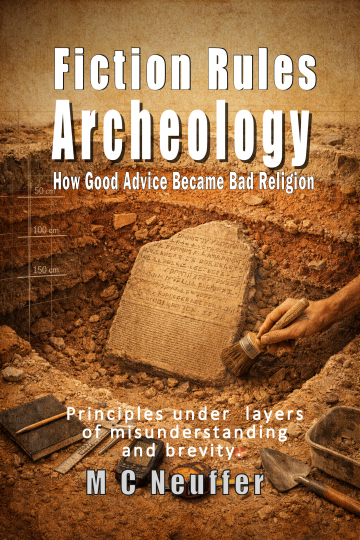
Fiction Rules Archeology shows you how good advice became a bad creative writing religion, and how to break away.
You’ve probably heard:
- Don’t Head-Hop
- Kill your darlings
- The purpose of dialogue is to advance the plot
- Every scene must have conflict
- Avoid adverb usage
- Avoid passive voice
- …and so many more
Over time, the underlying principles of Fiction Writing Rules have become corrupted and truncated to the point of uselessness – trapping writers in a nice, neat, and small box.
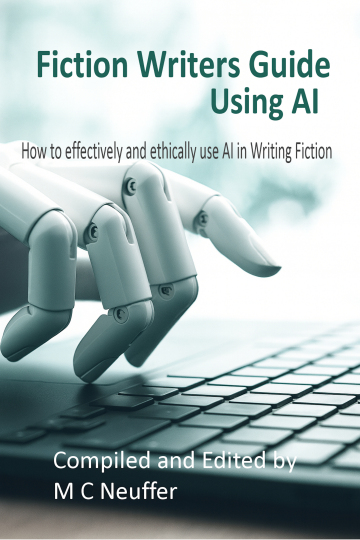
AI can help you write—but only you can tell the story.
In an era of rapid technological change, fiction writers are discovering a new kind of creative partner. Fiction Writer’s Guide Using AI invites you to step into that partnership with confidence, intention, and craft.
This book is not about shortcuts. It’s about expanding what’s possible.
You’ll learn how to collaborate with AI in ways that spark imagination, deepen insight, and strengthen your natural storytelling instincts—while keeping your voice, your style, and your creative vision firmly at the center. Inside, you’ll discover:
• How to brainstorm with AI without losing originality
• Ways AI can illuminate character, theme, and emotional truth
• Techniques for transforming prompts into powerful story momentum
• How to revise more effectively—scene by scene and line by line
• Guardrails that protect your voice and avoid AI-generated weaknesses
• Examples, checklists, workflows, and practical craft advice
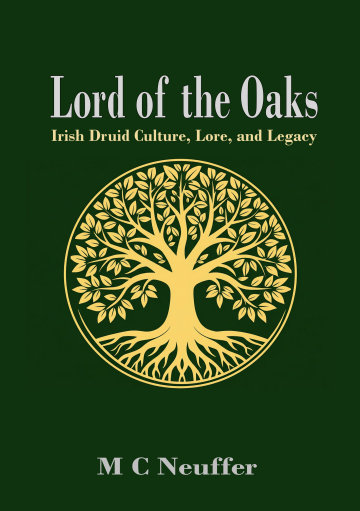
Irish Druid Culture, Lore and Legacy begins in County Meath.
A farmer plows around a hawthorn tree that stands alone in thirty acres of tilled ground. Forty minutes away, a motorway curves around an unmarked earthen mound because a county council quietly rerouted it. No archaeologist lobbied for the mound. There is no historical protection. Ireland simply went around.
Ask what kind of belief — not doctrine, not creed, but something older and quieter than either — would have to persist across twenty centuries of invasion, famine, conversion, colonization, and modernity to still have that kind of grip on a practical man’s hand as it reaches for the wheel.
That question is Lord of the Oaks.
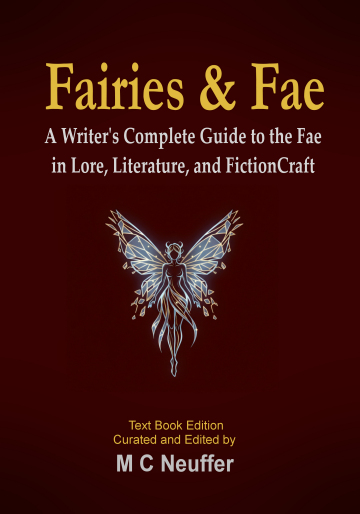
What Fantasy Writers will find here:
- The deep psychology behind fairy belief, Why the human mind, across every culture and century, has needed to populate the liminal spaces of experience with beings that operate by their own alien logic
- The Rulebook — iron, bargains, names, fairy food, time distortion, and the other cross-cultural laws that define fairy beings, with analysis of why
- The darkness — the changeling, the fairy lover, the Wild Hunt, the Fairy Queen, and the traditions that serious modern fiction has reclaimed from Victorian sanitization
- The history — from Shakespeare’s watershed treatment in A Midsummer Night’s Dream through Spenser, the Victorian catastrophe, Yeats, Tolkien, and the current romantasy explosion
- The hoaxes — the Cottingley Affair, the Fairy Investigation Society, P.T. Barnum to internet memes, and the anatomy of why we want to be fooled
- The craft — a dedicated section on building internally consistent fairy rule systems, writing genuinely alien fairy characters
 fictionbrain.com